Extracting data from escrow analysis statements
A mortgage servicer sends an escrow analysis statement once a year for every escrowed loan, each on its own layout under Regulation X. Underwriters and servicing transfer teams read them for the true housing payment, as portal downloads or as mailed letters a borrower scans and uploads.
Underwriting needs the new monthly payment, the new escrow payment, the shortage and the annual tax and insurance totals. The loan origination system uses them to count the full housing payment in the debt-to-income ratio.
What makes escrow analysis statements hard
Current and new side by side
Regulation X requires both the current and the new monthly payment, so each component prints twice and every amount belongs to one column.
A projection and a history
The statement carries the coming year's monthly projection and the past year's actual activity, with flags marking where actuals differed from the estimate.
Arithmetic across sections
The shortage, a cushion of up to one-sixth of annual disbursements and a spread of at least twelve months combine into one new payment.
Parse, extract, verify
Parse
Parse turns the document into reading-order Markdown and a hierarchy of blocks (text, tables, figures), and grounds each block to its exact location on the page.
Extract
You define the fields in a JSON schema, and Extract returns their values in a consistent, structured format, each linked back to where it appears in the Markdown.
Verify
Each value links back to where it appears, down to the character range in the Markdown, and the page and bounding box in the source document, so every result can be verified.
One escrow analysis statement, end to end
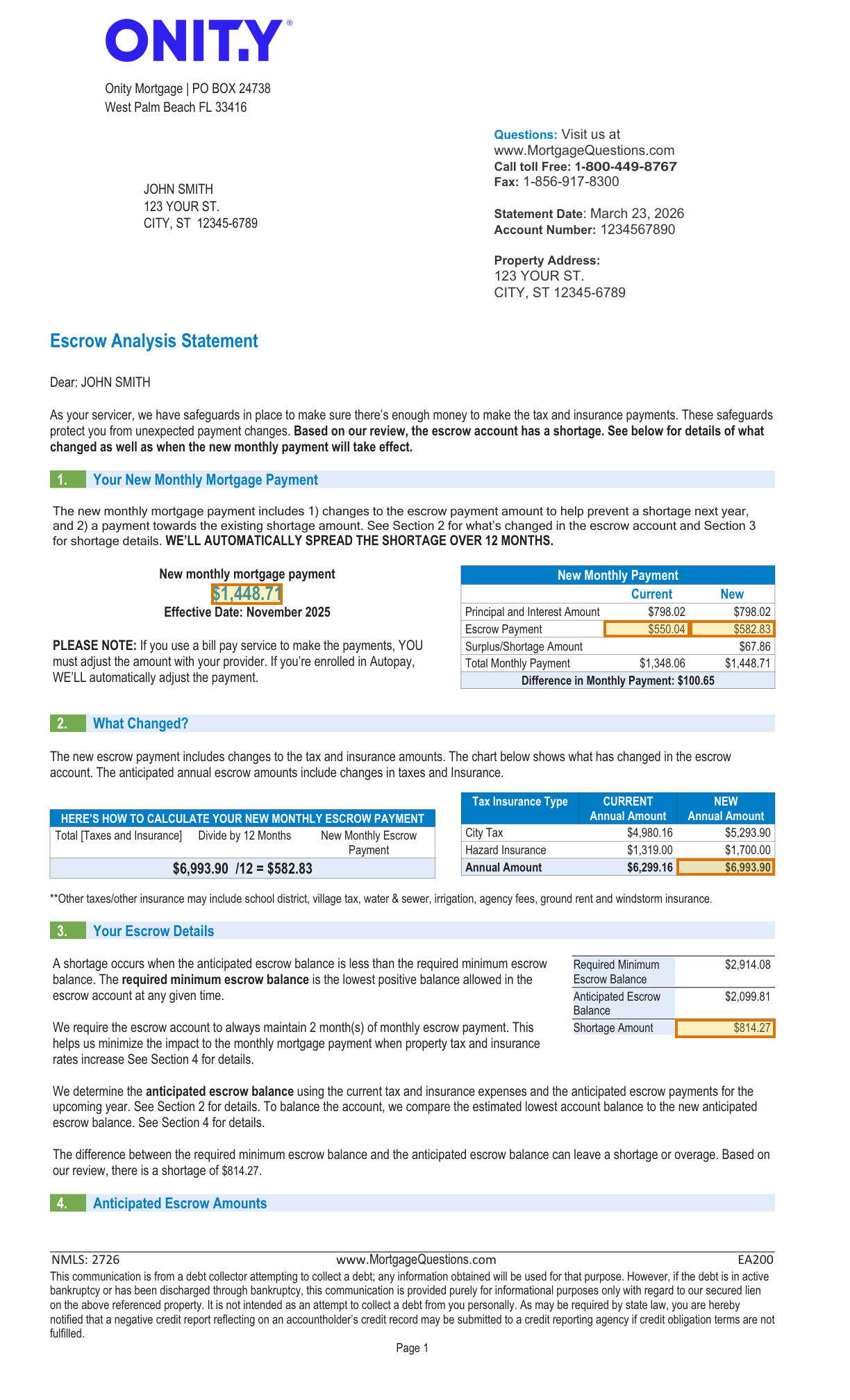
About this document: Onity Mortgage's sample escrow analysis statement for a loan with a shortage, published with its escrow guide on MortgageQuestions.com. Two legal-size portrait pages: a letter with the new payment, the tax and insurance changes and the shortage calculation, then the projection and the account history. Page 1 is featured. The borrower, address and account number are placeholders.
Processing objective: The objective is to explain the payment change: what the escrow account is short and what that does to the monthly payment. The new escrow payment is the annual total divided by twelve. Adding the shortage, spread over a year, and the unchanged principal and interest gives the new payment.
Demonstration fields: New monthly mortgage payment, Current escrow payment, New escrow payment, Shortage amount, New annual escrow total
The document
2 of 2 pages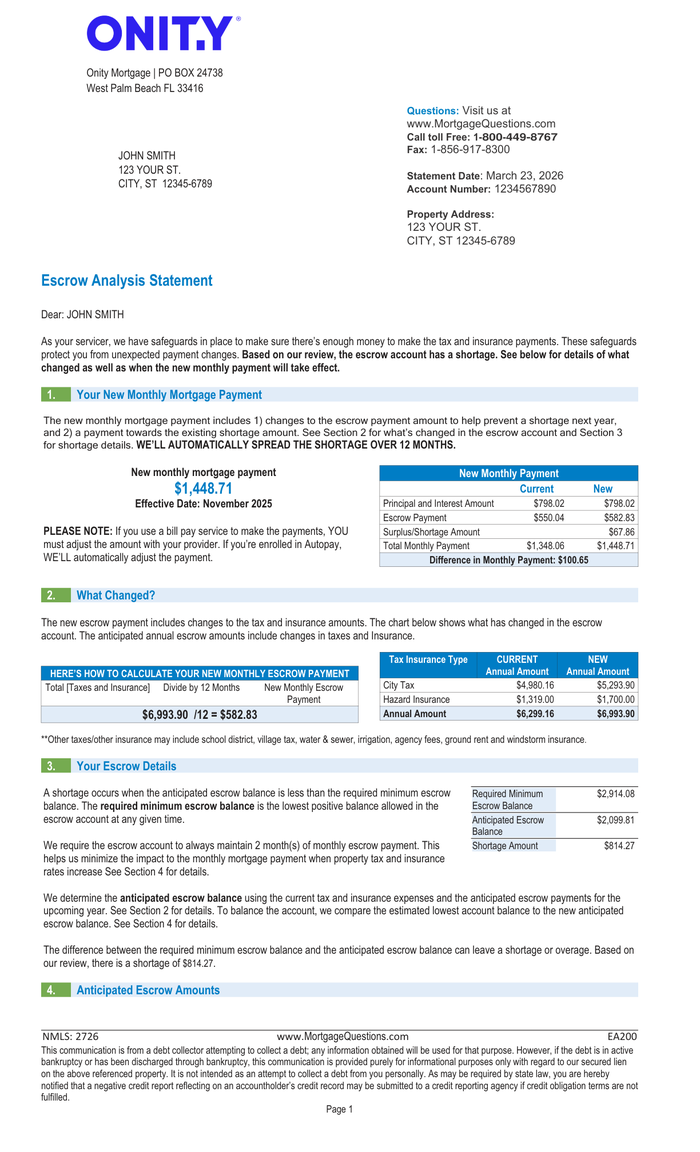 Page 1shown below
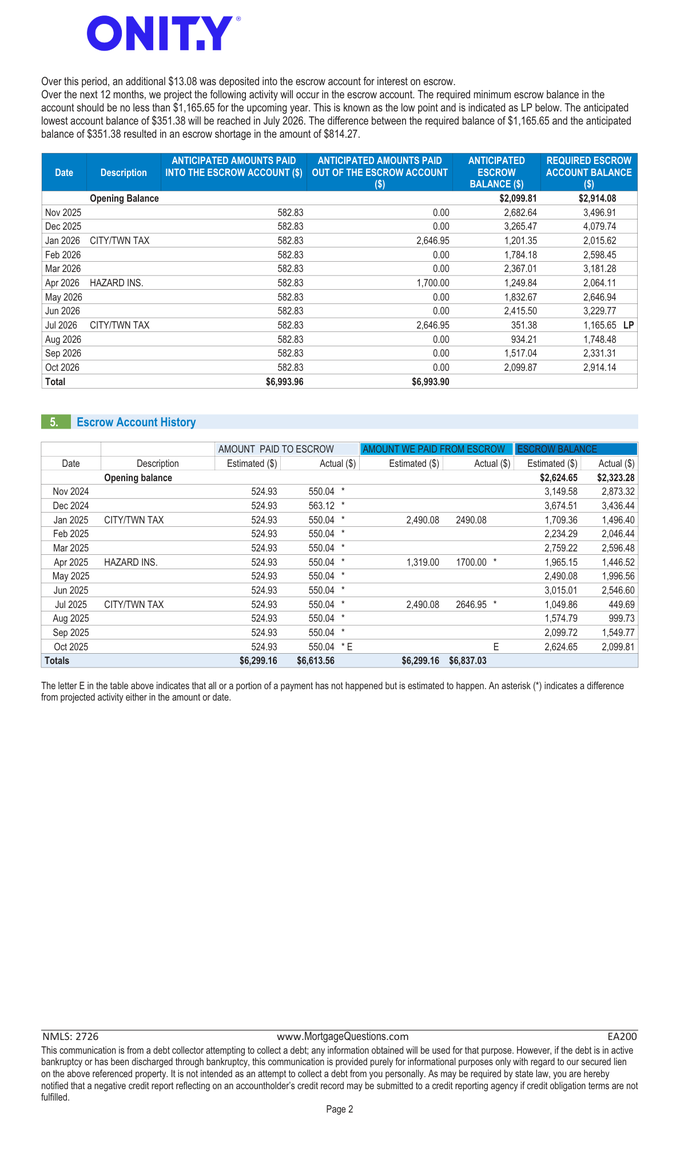 Page 2
Where each value came from
new_monthly_payment.new_total_monthly_payment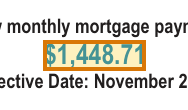
{
  "value": 1448.71,
  "page": 1,
  "range": {
    "end": 1121,
    "start": 1112
  },
  "box": {
    "xmin": 0.24842,
    "ymin": 0.4169,
    "xmax": 0.33249,
    "ymax": 0.43176
  }
}new_monthly_payment.current_escrow_payment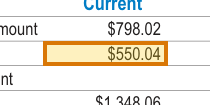
{
  "value": 550.04,
  "page": 1,
  "range": {
    "end": 1565,
    "start": 1558
  },
  "box": {
    "xmin": 0.71017,
    "ymin": 0.44307,
    "xmax": 0.81143,
    "ymax": 0.45511
  }
}new_monthly_payment.new_escrow_payment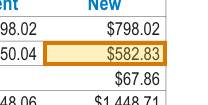
{
  "value": 582.83,
  "page": 1,
  "range": {
    "end": 1581,
    "start": 1574
  },
  "box": {
    "xmin": 0.81136,
    "ymin": 0.44307,
    "xmax": 0.91187,
    "ymax": 0.4551
  }
}escrow_details.shortage_amount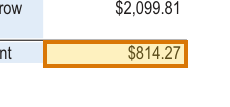
{
  "value": 814.27,
  "page": 1,
  "range": {
    "end": 3338,
    "start": 3331
  },
  "box": {
    "xmin": 0.79446,
    "ymin": 0.72786,
    "xmax": 0.91216,
    "ymax": 0.74115
  }
}new_annual_escrow_total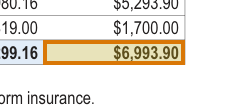
{
  "value": 6993.9,
  "page": 1,
  "range": {
    "end": 2614,
    "start": 2605
  },
  "box": {
    "xmin": 0.79619,
    "ymin": 0.61328,
    "xmax": 0.91156,
    "ymax": 0.62549
  }
}
How to try it yourself
Everything on this page is reproducible. The sample, its schema, and the Parse and Extract API outputs are published. You can repeat the same two calls from whichever surface you already build on.
- Claude Skilldescribe the job; the agent writes it
- CLIno code at all
- MCPexpose ADE docs as an agent tool
- REST APIany language
- Pythonlandingai-ade
- TypeScriptlandingai-ade
Documents into data
Accurate
The best accuracy on the difficult documents other tools get wrong, such as messy scans, complicated tables, checkboxes and handwriting.
Auditable
Every answer cites its sources. Values come back with an audit trail (page, bounding box, character range) so a human can review them.
Agentic
Applies multi-step reasoning, and plans before it acts. Handles documents it has never seen before and adapts to variations.
API-first
Composable APIs that drop into any tech stack and can be called from anywhere. Easy to build on and embed in your pipelines and products.
Affordable
Cost-competitive rates with complete price transparency. Spend controls before you run, and every job reports its exact cost.
Enterprise-grade
Built for production and scale from day one. Fully observable and monitored, running securely in our cloud or yours.
Built for high-volume, high-throughput production
- Zero data retention
- Priority rate limits
- Enhanced support
- VPC and on-prem deployment
Available on Team and Enterprise plans.